
Some 50 members of the Technology and Science Group enjoyed a fascinating talk by Prof Ray O’keefe on rare genetic conditions and why their study is crucial for improving patient care, advancing scientific understanding, and developing therapies that can benefit both rare and common diseases.
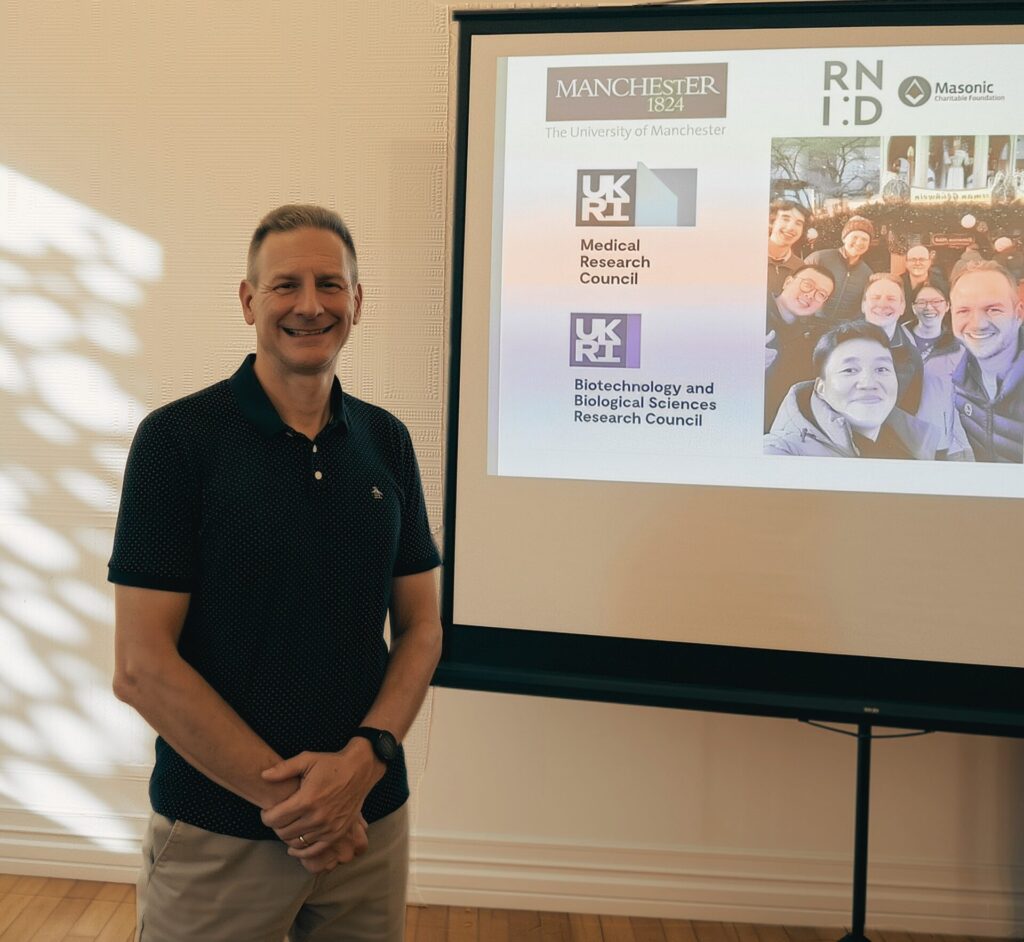
We heard how sometimes there are only a very few hundred people in the world with a rare disease, but that these rare mutations can expose pathways which shed light on how the body works.
What was surprising was the impact of advances in technology. Full DNA sequencing, once taking months and years can now be completed in 2 days and Artificial Intelligence is now extremely helpful in searching for and identifying variants.
Prof Ray very ably explained RNA splicing and how 30% to 40% of gene mutations affect RNA splicing and cause disease. Giving Spinal Muscular Atrophy as an example – where the gene mutation was identified in 1995, Prof Ray O’keefe described how the treatment progressed through trials, what treatments were available today and the positive impact these treatments had on the lives of the children affected by SMA.
Ray also covered the acquired Guillame Barre syndrome and the lookalike RCC1 mutation which presents with similar symptoms and how the RCC1 pathway may be involved in Alzheimer’s disease.
Ray O’Keefe is a Professor of Molecular Genetics at the University of Manchester. His research utilises biochemical, molecular biology and genetic approaches to understand how pre-mRNA splicing is carried out and regulated within cells with an emphasis on how genetic variants disrupt splicing in diseases such as craniofacial and neurodevelopmental disorders.